

English
Laser Hair Removal: Why You Should Focus on the Hair Follicle Rather Than the Hair
Laser Hair Removal: Why You Should Focus on the Hair Follicle Rather Than the Hair
2026.05.26
Laser Hair Removal: Why You Should Focus on the Hair Follicle Rather Than the Hair
Hello.
This is nbom Clinic.

As the weather slowly starts to warm up, we often find ourselves spending more time worrying in front of the mirror.
Especially as our clothes get lighter, shaving every morning can be much more stressful than expected.
Because of the coarse hair that quickly grows back even after a quick shave, you've probably thought at least once,
"Isn't there a way to solve this hassle?"
Today, for those of you with these concerns, we would like to have an honest conversation about the fundamental principles of laser
hair removal and effective ways to manage it.
Laser Hair Removal: Melanin is the Key
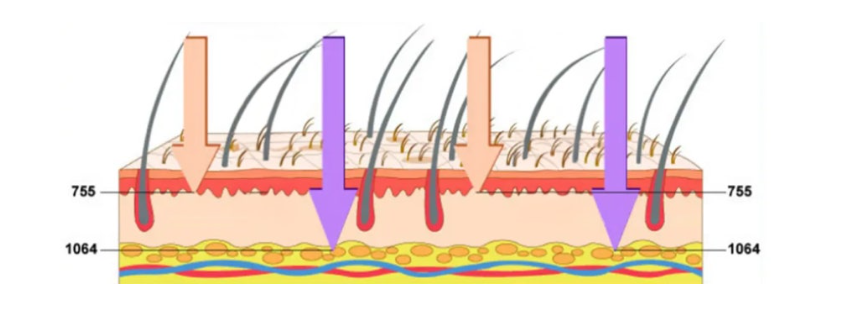
Many people often think of laser hair removal simply as a 'process of burning hair.'
To be more precise, however, the laser is a procedure that targets the 'hair follicle' deep inside the skin, not the hair on the surface.
When the black melanin pigment in the hair meets the laser energy, it converts into heat energy and neutralizes the hair follicle responsible
for creating hair.
Because it utilizes the principle of selectively reacting only to the color black, it reduces damage to the surrounding skin while managing only
the necessary areas.
However, since the laser's reactivity can vary depending on the thickness and color of the hair, a meticulous diagnosis tailored to the individual's
condition before the procedure is incredibly important.
Laser Hair Removal: Why is One Session Not Enough?
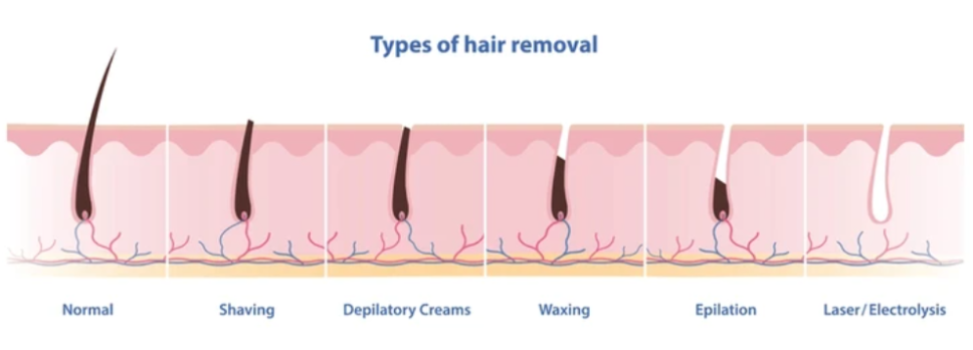
One of the most frequently asked questions is about the number of sessions required.
Every hair on our body has its own growth cycle, circulating through the anagen (growth), catagen (transitional), and telogen (resting)
phases.
The laser only works effectively on the 'anagen' hair that is connected to the hair root.
However, not all the hair on our body is in the anagen phase at the same time.
The hair visible on the surface is only a fraction of the total, with the rest hiding beneath the skin.
That is why we usually recommend receiving consistent treatments—around 5 to 10 sessions or more—at intervals of 4 to 6 weeks.
Each session is a process of sequentially clearing out the hairs that have newly entered the anagen phase.
You must carefully respect this waiting time to maintain the smooth skin we desire for a long time.
Laser Hair Removal: Why Customized Diagnosis is Needed for Each Body Part
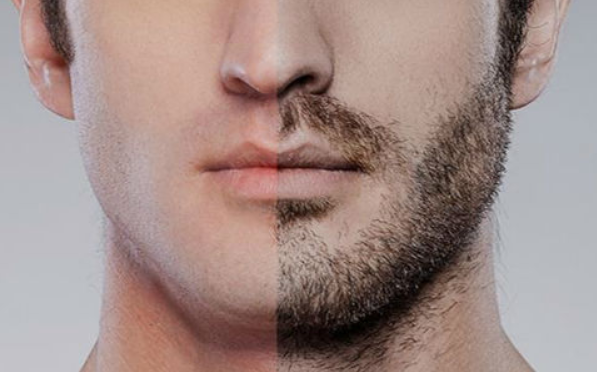
Because the difficulty of hair removal varies depending on the body part, the individual's skin condition and body hair must be thoroughly
analyzed.
Areas with thick hair, like the armpits, have a relatively fast and clear response.
On the other hand, facial peach fuzz has less pigment, requiring more careful energy adjustment.
Male beards are also considered a highly difficult area because the hair roots are deep and thick.
As such, everyone has different skin thickness, hair density, and pigment concentration, making the medical staff's judgment much more
important than simply operating a machine.
The staff must be able to closely understand the current state of the skin and set the appropriate output and intensity accordingly.
Laser Hair Removal: Pre- and Post-Care is Just as Important

There is a promise you must keep for satisfactory results.
You should avoid plucking your hair with tweezers or waxing before the procedure, as this removes the medium for the laser to travel through,
which can lower the procedure's efficiency.
If the hair is too long, the heat energy can disperse and pose a risk of burns, so it is best to lightly shave with a razor the day before the
procedure.
After the procedure, you must pay more attention than usual to moisturizing and sun protection.
This is an essential step to soothe the heated skin and prevent hyperpigmentation.
Hair removal means much more than simply getting rid of hair.
It is about removing hassle and filling your daily life with confidence.
The results can be even better when you start systematically according to your hair cycle.

We will do our best to help you enjoy a confident and smooth daily life throughout all four seasons.
If you have any questions, please feel free to contact us at any time.
Thank you.