

English
Facial Sagging: Can Ultherapy Prime Help?
Facial Sagging: Can Ultherapy Prime Help?
2026.07.27
Facial Sagging: Can Ultherapy Prime Help?
Published | July 27, 2026 | Last Updated: July 27, 2026
Medical Reviewer | Dr. Yumin Lee at MeSOnBOM Clinic
Hello.
This is MeSOnBOM Clinic.
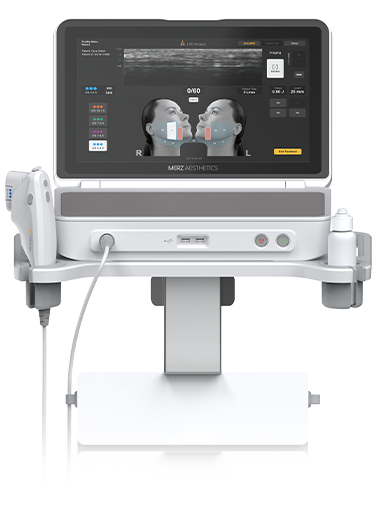
During consultations, many patients share concerns such as, "I haven't gained weight, but my facial line isn't what it used to be," or "My jawline feels less defined, and my jowls seem to be sagging."
In reality, facial sagging is not caused merely by the skin stretching.
As we age, collagen and elastin in the dermal layer decrease, and structural changes occur in the soft tissues and the SMAS (Superficial Musculoaponeurotic System) layer supporting the skin, leading to gradual alterations in facial contours.
Because skin thickness, fat distribution, and aging patterns vary from person to person, the degree and underlying causes of sagging can differ significantly even among individuals of the same age.
In this column, I will explain the causes of facial sagging from a medical perspective and how Ultherapy Prime approaches these changes.
What is Ultherapy Prime, and how does it differ from existing procedures?
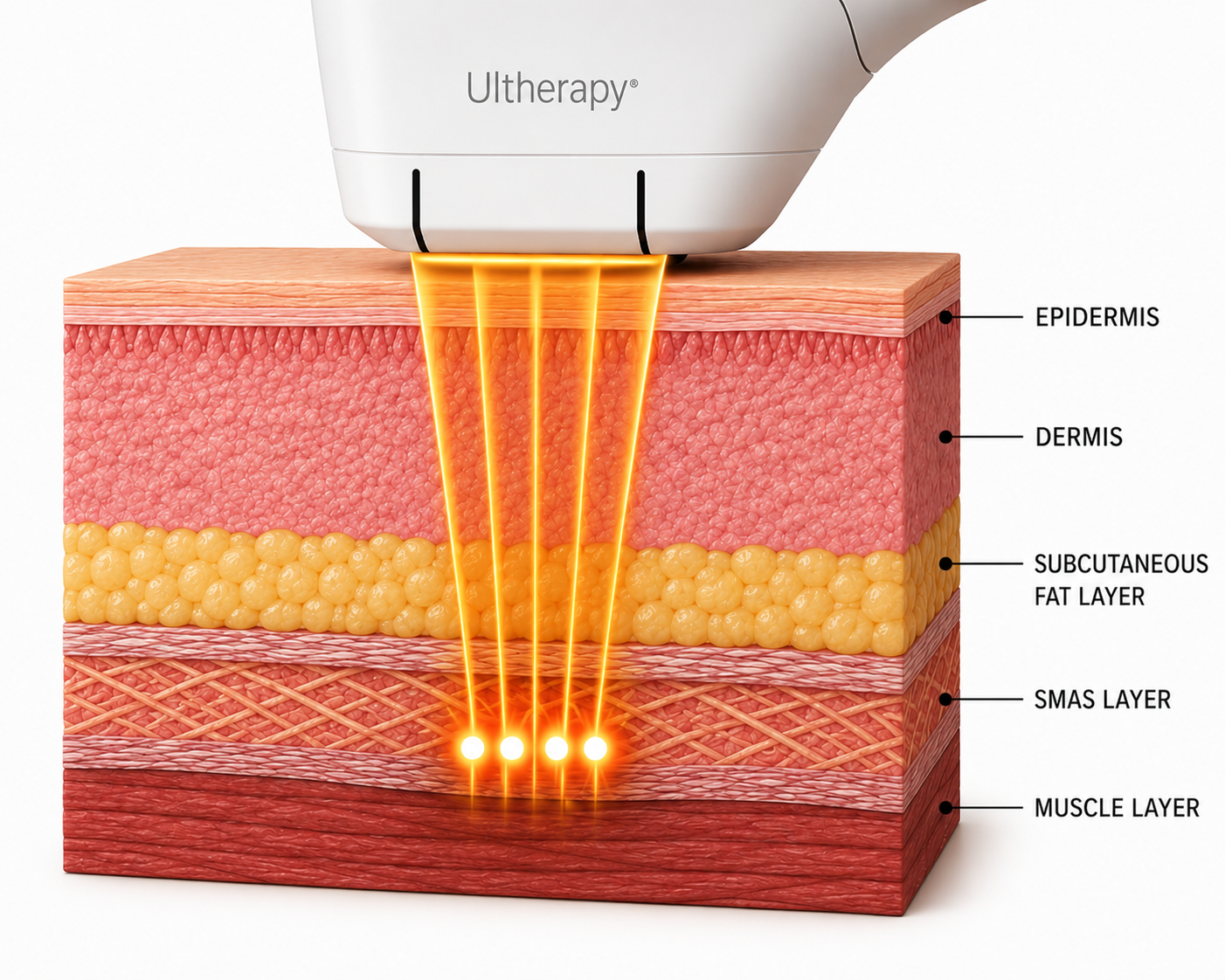
Ultherapy Prime is a non-invasive lifting procedure that uses High-Intensity Focused Ultrasound (HIFU) to deliver thermal energy into deep skin layers while minimizing damage to the skin surface, helping to improve skin elasticity.
At the target site where ultrasound energy is delivered, microscopic Thermal Coagulation Points (TCPs) are formed at approximately 60–70°C. This localized stimulation assists in inducing collagen remodeling through the skin's natural recovery process.
The primary feature of Ultherapy Prime is its real-time ultrasound imaging (DeepSee™), which allows the practitioner to view the skin layers directly during the procedure.
Because skin thickness, fat layer distribution, and anatomical structures differ for each individual, it is important to assess the patient's specific skin condition in real time rather than applying a uniform approach.
What is the fundamental cause of facial sagging due to skin aging?
Facial sagging is rarely caused by a single factor; rather, it results from concurrent aging across multiple tissue layers.
Collagen and elastin decline within the dermal layer, while structural changes occur in subcutaneous fat distribution, retaining ligaments, and facial soft tissues including the SMAS layer.
These cumulative factors cause facial contours to gradually shift downward.
Medical Context
According to dermatological textbooks and skin aging research, collagen within the dermal layer naturally decreases by approximately 1% per year starting in the mid-to-late 20s. As this reduction accumulates over time, skin elasticity declines, and changes in facial contours become progressively noticeable.
In clinical practice, individuals of the same age often exhibit different skin thicknesses, fat volumes, and areas of sagging.
Therefore, evaluating facial sagging requires a comprehensive assessment of current skin conditions rather than relying solely on age.
How does Ultherapy Prime work, and how are the transducer tips selected?
Ultherapy Prime uses real-time ultrasound visualization to identify skin layers, form thermal coagulation points at target depths, and encourage collagen remodeling.
Because skin thickness and fat distribution vary across different areas of the face, practitioners typically select specific transducer tips or combine multiple depths rather than using a single tip throughout.
Tip Type | Target Depth | Key Application Areas | Expected Role |
|---|---|---|---|
1.5 mm | Upper Dermis | Around eyes, Forehead, Around mouth | Managing fine lines and improving elasticity in delicate skin areas |
3.0 mm | Lower Dermis | Cheeks, Zygomatic region, Jowls | Inducing collagen remodeling within the dermal layer |
4.5 mm | SMAS Layer | Jawline, Double chin, Neckline | Assisting in improving elasticity within deeper structural tissues |
During the procedure, adjusting the choice of tips and energy levels based on individual anatomical structures and skin conditions is essential for safe and tailored delivery.
Why is post-procedure care important?
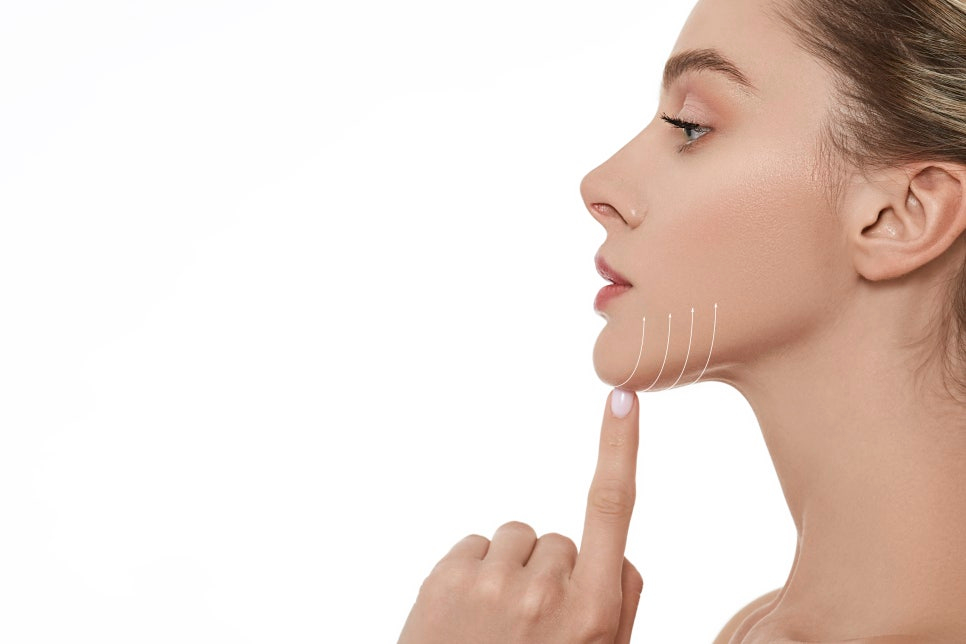
Following an Ultherapy Prime procedure, a natural recovery process takes place within the deeper skin layers.
During this period, minimizing skin irritation and maintaining proper moisturization and sun protection can support optimal skin recovery.
① Sufficient Moisturization and Sun Protection
As the skin may temporarily feel dry, applying adequate moisturizer and wearing broad-spectrum sunscreen when outdoors is recommended.
② Minimizing Skin Irritation
For about one week following the procedure, it is advisable to avoid harsh physical or chemical exfoliants, such as strong peels or scrubs.
③ Avoiding Excessive Thermal Exposure
Activities that significantly raise body temperature—such as saunas, steam rooms, strenuous exercise, and excessive alcohol consumption—should be avoided for a period recommended by your provider.
Frequently Asked Questions (FAQ)
Q1. How much discomfort or pain is involved?
A. As energy is delivered to deeper skin layers, patients may experience a dull ache or tingling sensation. Tolerance levels vary individually. Medical staff adjust energy parameters based on skin condition and sensitivity, and topical anesthetic creams may be applied prior to the session to enhance comfort.
Q2. Can I resume normal daily activities immediately?
A. As a non-invasive procedure, most patients can return to daily routines immediately afterward. Mild, temporary redness, slight swelling, or mild tenderness may occur, but these typically resolve naturally over time.
Q3. When do results appear, and how long do they last?
A. Collagen remodeling is a gradual process; progressive changes may be observed over approximately 1 to 3 months following treatment. Duration varies depending on individual skin condition and aging progression, with general clinical guidance suggesting results may persist for around one year.
Ultherapy Prime is a non-invasive ultrasound procedure where individual skin characteristics and facial anatomy must be carefully evaluated.
Consulting thoroughly with a qualified medical professional allows for a precise evaluation of your skin's current state and the development of an appropriate treatment plan.

Author | Dr. Yumin Lee
Medical Institution | MeSOnBOM Clinic