

English
Trapezius Botox for a Slimmer Shoulder Line
Trapezius Botox for a Slimmer Shoulder Line
2026.08.14
Trapezius Botox for a Slimmer Shoulder Line
Published: August 18, 2026 | Last Updated: August 18, 2026
Medical Reviewer | Dr. Yumin Lee at MeSOnBOM Clinic
Hello.
This is Dr. Yumin Lee from MeSOnBOM Clinic.
If your shoulders look raised or your neck appears shorter, an overdeveloped trapezius muscle may be one of the reasons.
Long hours at a computer, frequent smartphone use, and repetitive shoulder movements can increase tension in the trapezius, making the shoulder line appear more prominent.
For those considering Hongdae Botox, trapezius Botox may be an option for refining the neck-to-shoulder line.
In this article, we’ll explain how trapezius Botox works, who may consider the treatment, what changes to expect, and what to keep in mind before and after treatment.
Why Can an Overdeveloped Trapezius Make the Neck Look Shorter?
When the trapezius is prominent, the transition between the neck and shoulders may appear higher and fuller. As a result, the neck can look relatively shorter even though its actual length has not changed.
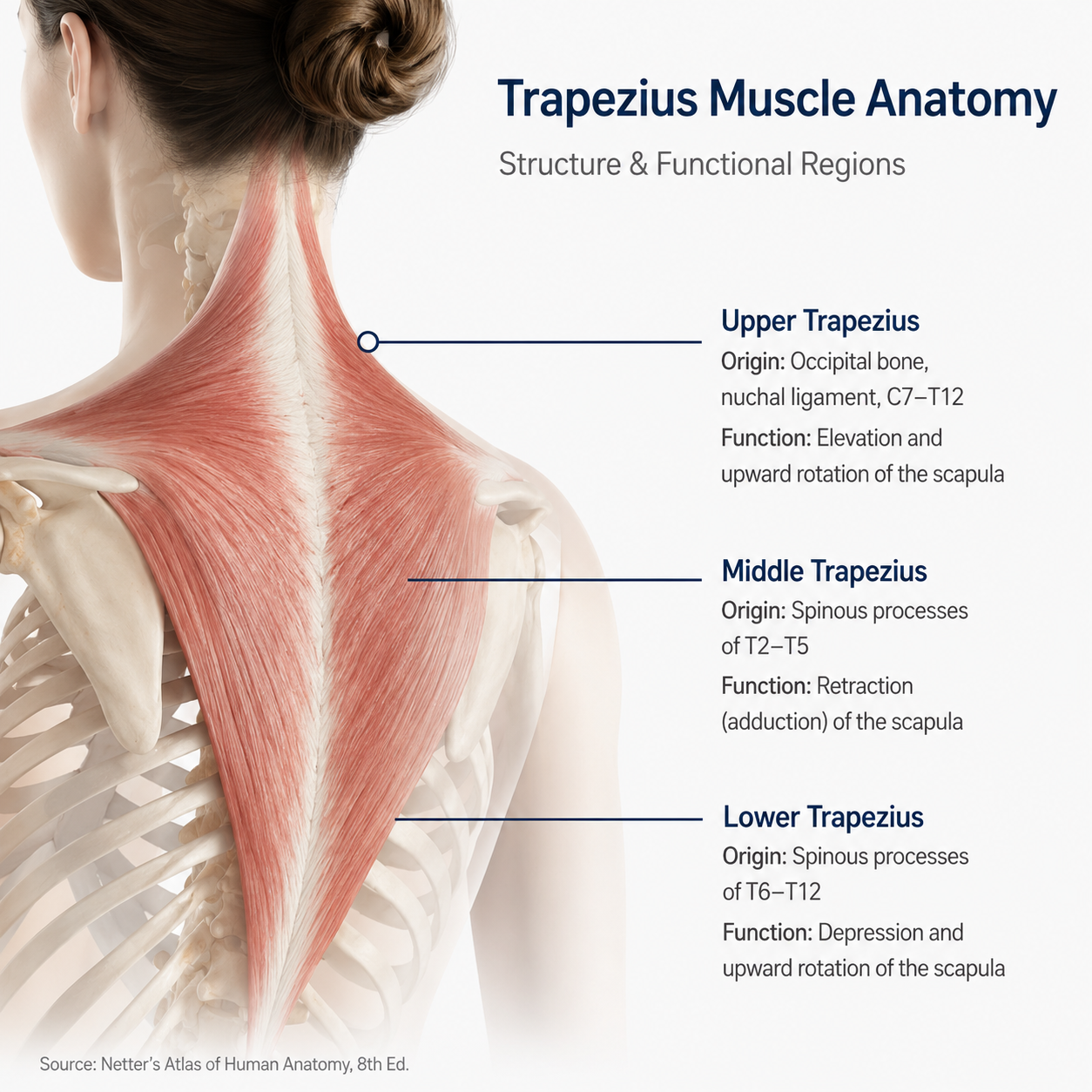
The trapezius extends from the back of the neck across the shoulders and upper back. It plays an important role in supporting the head and neck and controlling movements of the shoulder blades.
Spending long periods in front of a computer or repeatedly looking down at a smartphone may place additional strain on the muscles around the neck and shoulders.
The trapezius may also become more prominent in people whose exercise routines or occupations involve frequent or repetitive shoulder movements.
However, raised-looking shoulders are not always caused by trapezius hypertrophy alone.
Skeletal structure, posture, fat distribution, and muscle development can all influence shoulder contour. For this reason, if you are considering Hongdae Botox, it is important to first identify what is contributing to the appearance of your shoulders.
How Does Trapezius Botox Help Refine the Shoulder Line?
Trapezius Botox temporarily reduces excessive muscle activity by inhibiting nerve signals to the targeted trapezius muscle. Over time, this may reduce muscle volume and create a smoother neck-to-shoulder line.
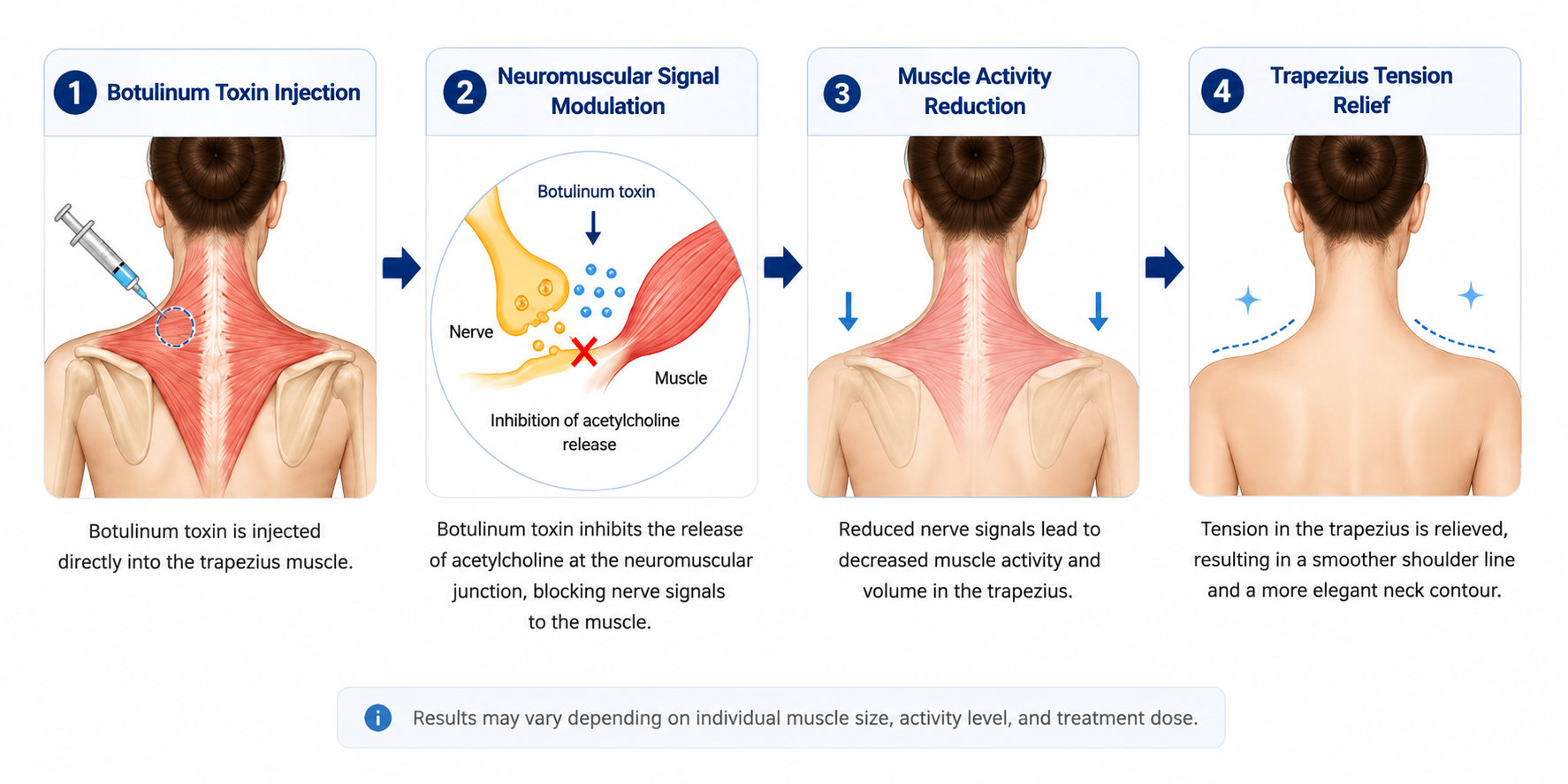
Botulinum toxin works at the neuromuscular junction by inhibiting the release of acetylcholine, a neurotransmitter involved in muscle contraction.
This mechanism reduces muscle activity temporarily, and as the targeted trapezius becomes less active, its volume may gradually decrease over time.
Research on botulinum toxin type A for trapezius hypertrophy has also evaluated changes in trapezius muscle thickness and shoulder contour following treatment.
For those considering Hongdae Botox, the dose and injection areas should therefore be tailored to the size, location, symmetry, and activity of the trapezius muscle.
Who May Consider Trapezius Botox?
Trapezius Botox may be considered when prominent trapezius muscles make the shoulders appear raised or the neck look relatively short. It may also be considered when excessive muscle activity contributes to a bulky shoulder contour.
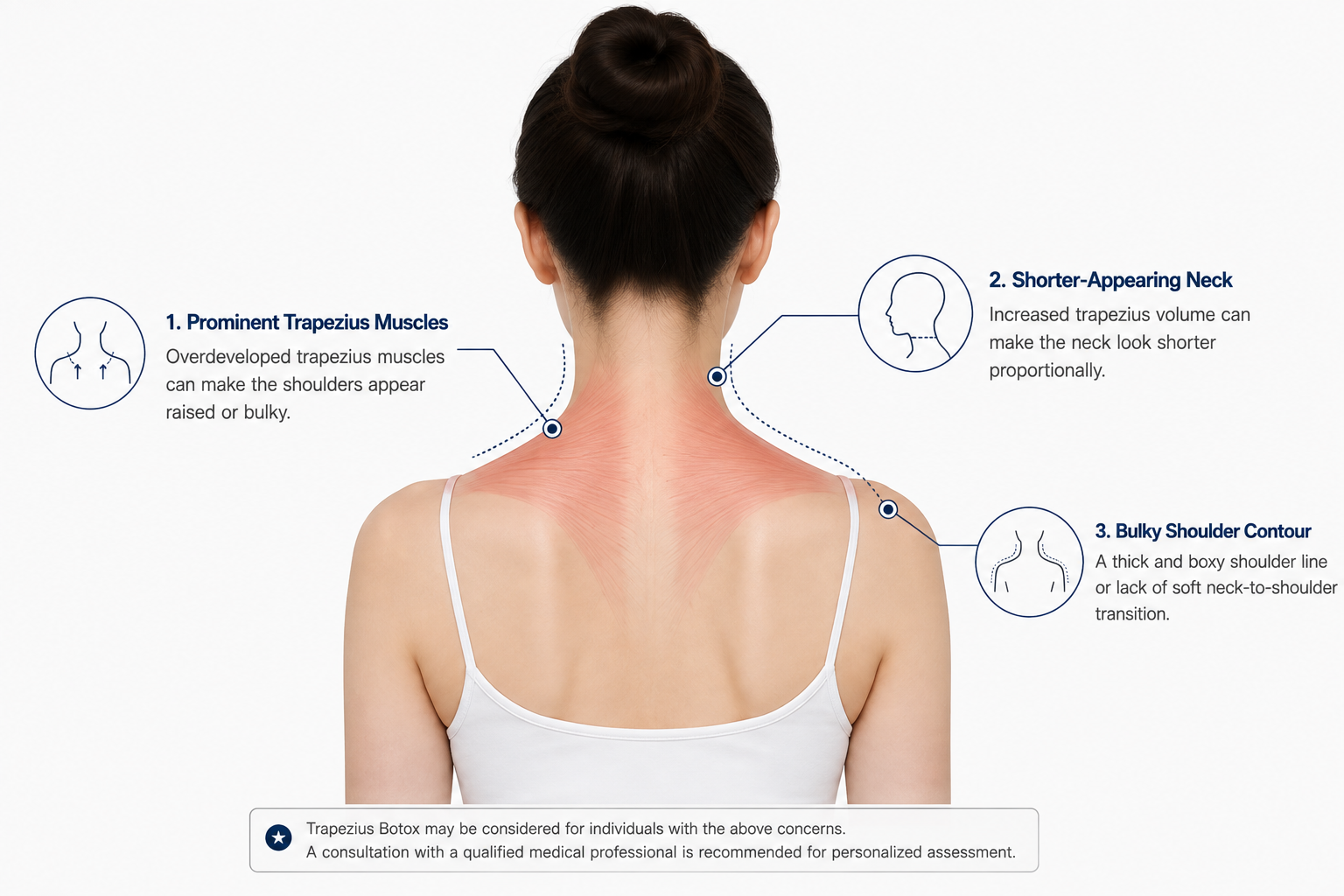
However, not every shoulder-line concern is caused by the trapezius muscle. Skeletal structure, posture, and fat distribution can also affect the overall contour.
For those considering Hongdae Botox, identifying whether muscle hypertrophy is a major factor is an important step before treatment.
| Concern | Potential Change |
|---|---|
| Raised-looking shoulders | Smoother shoulder contour |
| Short-looking neck | More defined neck-to-shoulder line |
| Prominent trapezius muscles | Reduced muscle volume |
| Wedding or photoshoot | More refined shoulder line |
Trapezius Botox may also be considered when excessive trapezius tension or tightness is present.
However, evidence regarding pain relief remains mixed. One randomized controlled trial involving upper trapezius myofascial trigger points found no significant difference in overall pain-score reduction compared with placebo, although pressure pain threshold improved at one measured time point.
Therefore, trapezius Botox should not automatically be considered a treatment for all types of neck or shoulder pain. Persistent or significant pain should be evaluated separately to identify its underlying cause.
When Does Trapezius Botox Take Effect, and What Should You Keep in Mind?
Trapezius Botox does not change the shoulder line immediately after treatment. Changes develop gradually as muscle activity decreases and muscle volume begins to change over time.
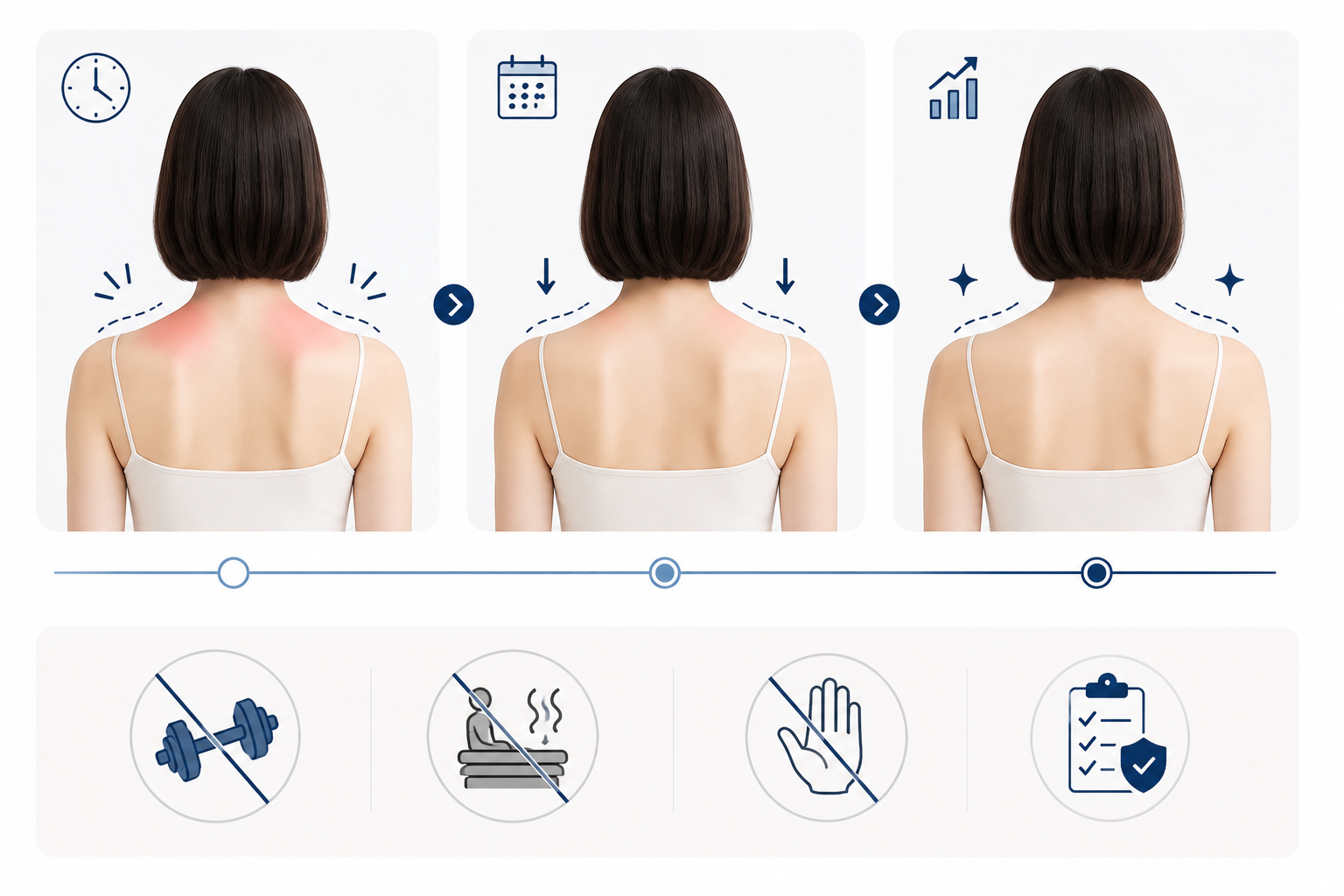
Individual responses vary, but changes in muscle tension or movement may begin to become noticeable within approximately 1–2 weeks. Visible changes in shoulder contour may take longer as muscle volume decreases gradually.
If you are considering Hongdae Botox before a wedding, photoshoot, or another important event, it is better to plan the treatment with enough time rather than scheduling it immediately before the event.
The trapezius is a large muscle involved in shoulder movement. Excessive weakening may temporarily cause shoulder fatigue, reduced strength, or discomfort when moving the arms.
For this reason, the appropriate dose should be based on muscle size, development, symmetry, and movement rather than simply choosing a higher number of units.
After treatment, avoid strong massage or pressure over the treated area. Heavy lifting and strenuous upper-body exercise should also be limited during the early post-treatment period.
Alcohol consumption, saunas, hot baths, and other activities that significantly raise body temperature are also generally best avoided for a period after treatment.
Temporary redness, bruising, tenderness, or stiffness may occur around the injection sites. If weakness or discomfort is severe or persists, medical evaluation is recommended.
Frequently Asked Questions (FAQ)

Q. Does trapezius Botox actually make the neck longer?
No. It does not change the actual length of the neck, but reducing trapezius volume may make the neck appear relatively longer.
Q. Can I consider trapezius Botox if my shoulders often feel tight or painful?
It may be considered when excessive trapezius tension is present. However, persistent pain should first be evaluated to determine its cause.
Q. Do I need to keep getting trapezius Botox regularly?
Not necessarily. Additional treatment should be considered based on your current muscle condition and response to previous treatment.
Having prominent trapezius muscles does not mean that a larger dose of botulinum toxin will necessarily produce a better result.
Even when two people have similar concerns, the underlying cause may differ. One person may have significant muscle hypertrophy, while another may have persistent tension related to posture or daily habits.
Because the trapezius plays an important role in neck and shoulder movement, evaluating muscle size, location, symmetry, and movement before treatment is important.
If you are considering Hongdae Botox for your shoulder line, it is better to look beyond the visible contour alone and first assess why the trapezius appears prominent. A treatment plan can then be tailored to your individual anatomy and muscle condition.
Thank you.

References
1. Dressler D, Adib Saberi F. Botulinum Toxin: Mechanisms of Action. European Neurology. 2005;53(1):3–9.
2. Kwanchuay P, Petchnumsin T, Yiemsiri P, et al. Efficacy and Safety of Single Botulinum Toxin Type A (Botox®) Injection for Relief of Upper Trapezius Myofascial Trigger Point: A Randomized, Double-Blind, Placebo-Controlled Study. Journal of the Medical Association of Thailand. 2015;98(12):1231–1236.
3. Wang L, Zhang M, Li T, et al. Nerve Distribution Method is Superior to the Conventional Method in BoNT-A Treatment of Trapezius Hypertrophy: A Randomized Controlled Trial. Aesthetic Plastic Surgery. 2024;48(6):1210–1217.
Author | Dr. Yumin Lee
Medical Institution | MeSOnBOM Clinic